Let Google know they’re on the wrong side of history.
indie pop binger

On December 19th 1989 a song in four keys with 18 key changes was released as a single by a major label. It was recorded with a simple drum machine track and a bunch of synth tracks. The lead vocalist’s instrument was the accordion. It wasn’t Al Yankovic.
It peaked at #6 on the Modern Rock Tracks chart in USA despite sounding nothing like Nirvana, Sonic Youth, or Radiohead. It made #6 on the UK Single charts alongside of Madonna, De La Soul and New Kids on the Block,
Using completely different instrumentation, it was performed live with Doc Severinsen and the Tonight Show Band at 10BPM faster than in rehearsal.
It was They Might Be Giants (TMBG).
A short list of creators who have publicly cited TMBG as being influential in their work:
Their theme song “Boss of Me” for Malcolm in the Middle won a Grammy Award.
If you’re tight on time, and not been exposed to Flood, at least listen to the 46 second track: Minimum Wage and Istanbul (Not Constantinople) at 2:33.
Otherwise take 43 minutes to hear all of Flood.

I didn’t open Spotify a few days and when I turned it back on I got a notification new to me: “you have a new follower“.
Please tell me if you ever got that from Spotify. I’ve never.
I recognized the follower’s name and a upon seeing mutual follows, saw old friends. A track on their playlist moved me and I had no way to thank them.
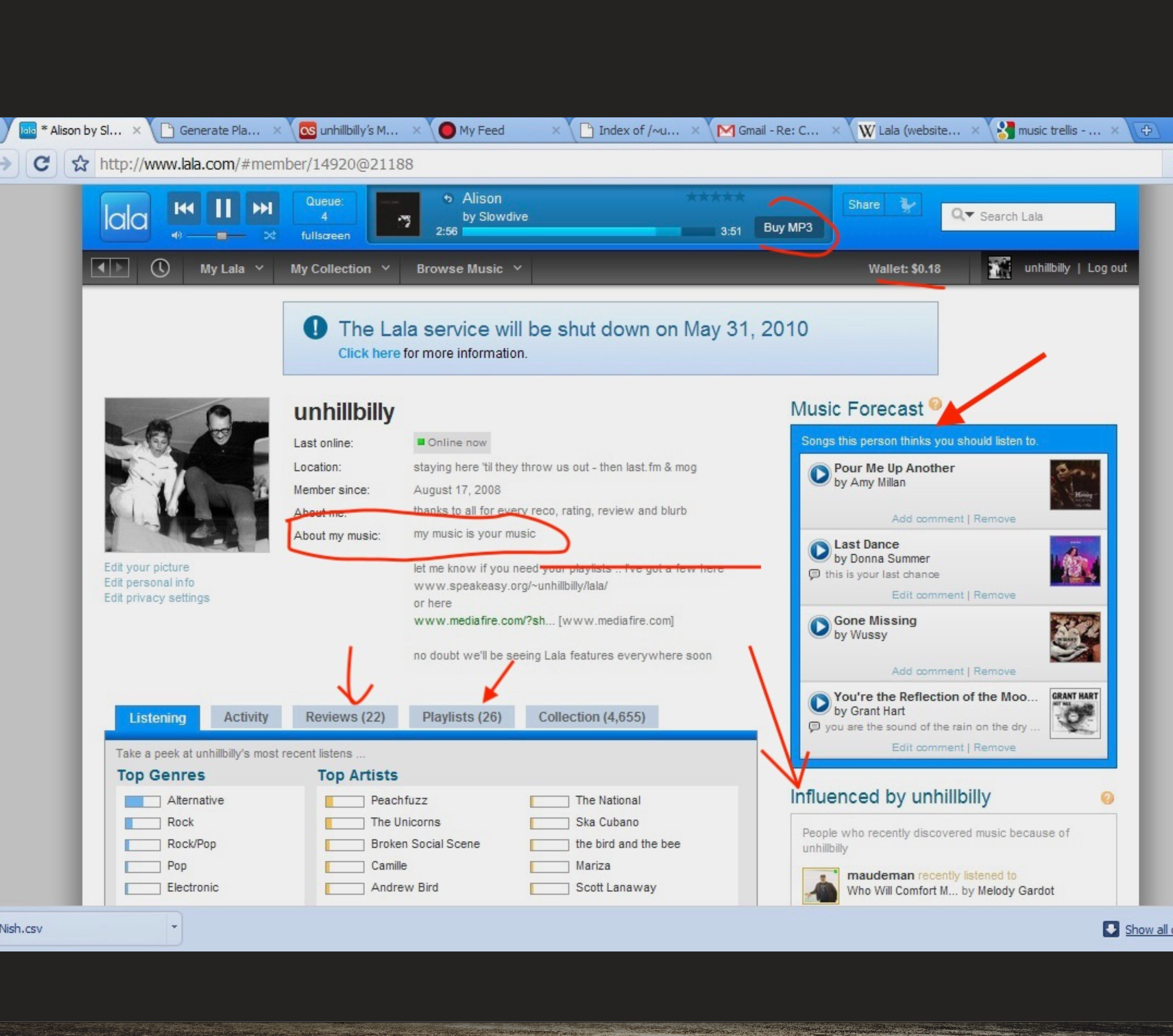
The primordial on-line music platform Lala got it right from the start when they transformed from physical media exchange to digital/cloud music : iTunes and more – a limited social network for ephemeral interest in musical audio content.
It was gorgeous. You could buy or rent tracks for download. Stream for monthly subscription.
I’ve studied on-line communities since e-mail groups in the 90’s – Lala was exemplary in demanding equanimity among its subject matter: everybody gets the same real estate.
With even a small number of users, that signal was enough to care about another user even though we have diverse affinities.
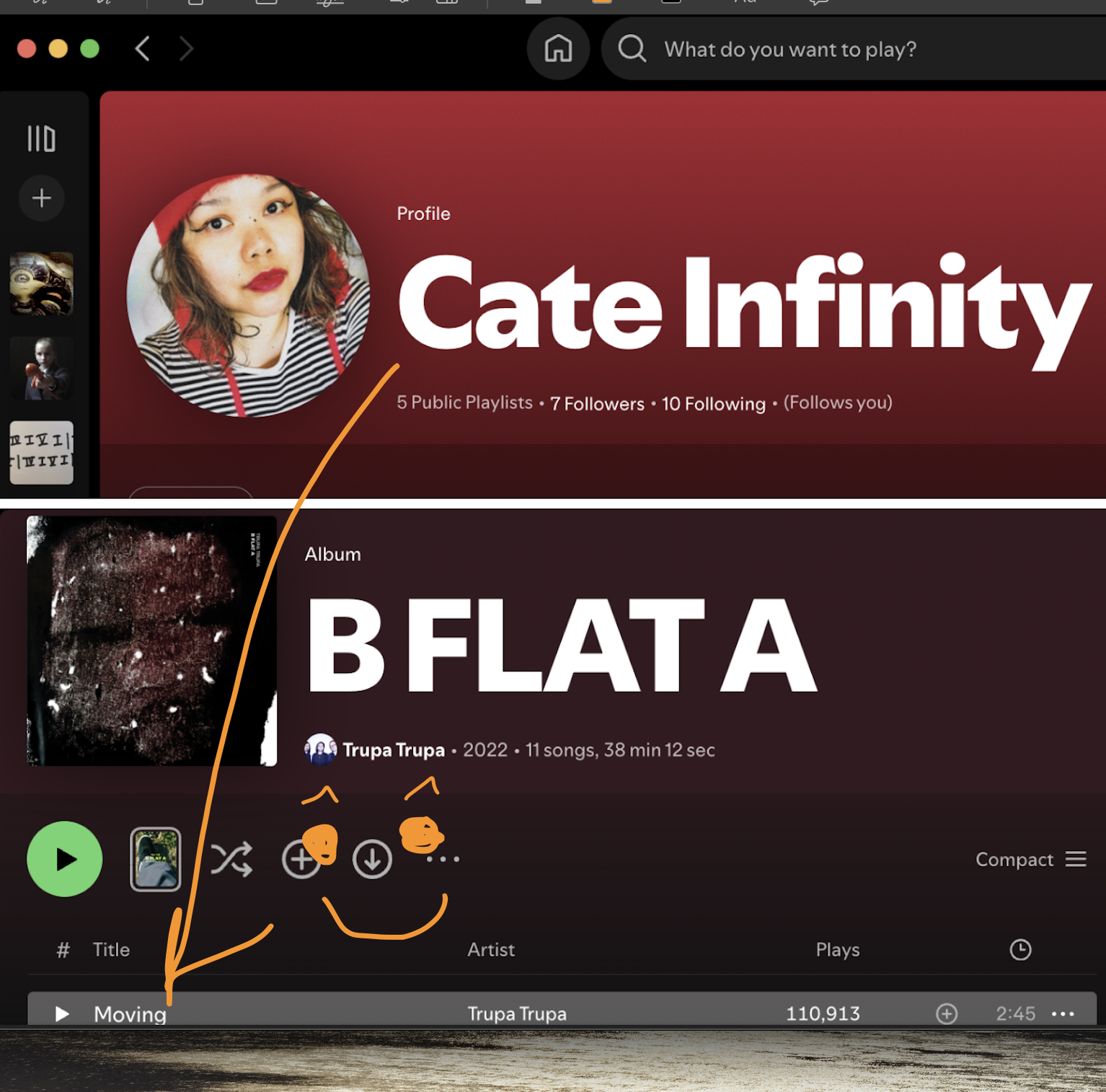
Cate ∞ wherever you are, appreciate the follow, but especially thankful for hearing this track .
That said, Spotify ought to be better.

Our minds were positively altered because by You Forgot It In People. Twenty years later after first hearing, there still are tracks that bring us to tears.
TL; DR: ♥️ Middle Kids and Mduo Moctar deliver.
We appreciate all of the artists covering this challenging work. There are a couple of gems on this album from folks perhaps unfamiliar to you.
For the original album tracks having the most emotional impact upon us, it’s a challenge for anyone to offer something either new or even sufficiently affirming given the source material and the variety of textures in all the live performances by Broken Social Scene.
There were two such occasions:

Appreciation of souls in Lisboa girding their loins.


I have no authority for saying so, but from what I’ve read and listened to, this I believe:
If the signal is of musical form, how is this exploited by composers and music arrangers?
Here’s my simplistic take:
One strategy is to alter the “top” (melody) and repeat the “bottom” (harmonic structure). Not unlike classical composers “Theme and Variation” motif. See Mozart, et al.
Another strategy is: alter the “bottom” (harmonic structure), and repeat the “top” (melody). It’s most prevalent in jazz and to some degree in modern rock and hip-hop.
(insert photo of most representative composer here)
Of course this is a sophomoric generalization and a vast over-simplification. But it’s something to think about when inventing an arrangement.
(so many more references to musical works)

Stumbled upon a recording of friends singing backed by my silly strumming.

If were someone to ask me who could curate all of popular music in America over the past 50 years, my first thought is Questlove.
Evidence: https://www.autostraddle.com/questloves-amy-winehouse-uncensored-celebrity-encounters-102326/

100%, full scale.


Anyone else wanting to hear a Willow + Saya Gray collaboration?


